



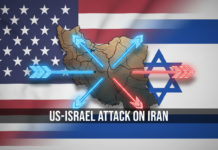












Will a US-Israel Attack on Iran Reshape the Middle East? For decades, the friction between the West and Tehran was confined to the shadows—a relentless cycle of cyber intrusions, targeted assassinations, and proxy skirmishes.
But the veneer of plausible deniability is wearing thin. The prospect of a direct, kinetic US-Israel attack on Iran is no longer a fringe theory; it is a central pillar of regional contingency planning.
This shift from clandestine rivalry to potential direct military engagement threatens to dismantle the existing global order, sending shockwaves through energy markets and redefining modern warfare.
US-Israel Attack on Iran: Scenarios and Global Impact
Understanding the gravity of this moment requires a look at the tactical and strategic drivers pushing the Middle East toward a historic crossroads.
The Strategic Imperative:
Beyond the Nuclear Threshold at the heart of this tension lies the ‘nuclear file.’ For Israel, an Iranian nuclear weapon isn’t just a strategic challenge; it’s perceived as an existential threat that dictates their ‘Begin Doctrine’—a policy of pre-emptive strikes to prevent regional adversaries from acquiring WMDs.
While Washington has historically leaned on diplomatic frameworks, the rapid acceleration of enrichment levels has effectively narrowed the window for negotiation.
Yet, the scope of a potential attack extends beyond centrifuges. It targets the very infrastructure of Iran’s regional reach.
From the shores of the Mediterranean to the mountains of Yemen, Iran’s influence via its ‘Axis of Resistance’ complicates the calculus.
A coordinated strike would likely aim to degrade the command-and-control networks that sustain these alliances.
Tactical Realities:
The Architecture of a Modern Strike: Any military move against Iran would be far from a simple sortie. It would be an intricate, multi-domain campaign leveraging the peak of Western electronic and kinetic capability.
Precision Aerial Campaigns
The opening salvo would almost certainly involve stealth assets like the F-35 Lightning II, designed to bypass sophisticated air defences like the S-300. The primary targets—hardened sites like Natanz or the deep-mountain facility at Fordow—require more than standard ordnance.
These missions would necessitate high-yield ‘bunker-buster’ munitions. While Israel possesses the intent and the hardware, the logistical endurance required for a sustained campaign would demand significant US support, specifically in aerial refuelling and intelligence surveillance.
Cyber Suppression and Electronic Warfare
In the modern era, the first shots are fired in digital space. Building on the legacy of the Stuxnet virus, a US-Israel attack on Iran would commence with a massive cyber offensive.
The goal is simple: paralyse the IRGC’s communication lines, blind their radar arrays, and disrupt the national power grid.
By neutralising the enemy’s ability to see or speak before a single jet takes off, the coalition minimises its own risk while creating a window of tactical dominance.
The Ripple Effect:
Global Fallout and the Strait of Hormuz Tehran has made it clear: any strike on its soil will trigger a ‘crushing’ response. The unpredictability of this escalation is what keeps global markets on edge.
Weaponising Global Energy
Geography is Iran’s greatest asymmetric advantage. The Strait of Hormuz, a narrow chokepoint through which a fifth of the world’s oil flows, serves as a strategic trigger.
Should Iran attempt to block this passage, the surge in crude prices would trigger a global economic contraction.
The US Navy’s Fifth Fleet remains the primary deterrent here, but a full-scale maritime conflict in these congested waters would be catastrophic for global trade.
Multi-Front Proxy Retaliation: Israel’s borders would likely ignite instantly. Hezbollah, with its arsenal of over 150,000 rockets, represents a persistent threat to Israeli population centres.
Simultaneously, US assets in Iraq and Syria would face intensified pressure from local militias. This isn’t just a two-nation conflict; it is a regional ecosystem where every action triggers a dozen reactions.
The Geopolitical Chessboard
No strike happens in a vacuum. Russia’s growing military dependency on Iranian drones and China’s role as Tehran’s primary economic lifeline add layers of international friction.
The Gulf Cooperation Council (GCC) states find themselves in the most precarious position—caught between a desire to see Iran’s wings clipped and the fear of being the first targets of Iranian retaliation.
As noted, the threshold for nuclear breakout is closer than ever, leaving little room for error.
See also NVIDIA Q4 Fiscal Earnings
A Final Strategic Pivot
The debate remains: would a US-Israel attack on Iran solve the nuclear dilemma or merely buy time at the cost of total regional destabilisation?
What is certain is that a direct confrontation would mark a definitive end to the era of ‘managed’ conflict.
We are looking at a potential pivot toward a more volatile, unpredictable Middle East. In this high-stakes game of brinkmanship, the world watches the horizon, hoping the sheer cost of war remains the final barrier to a regional conflagration.


